
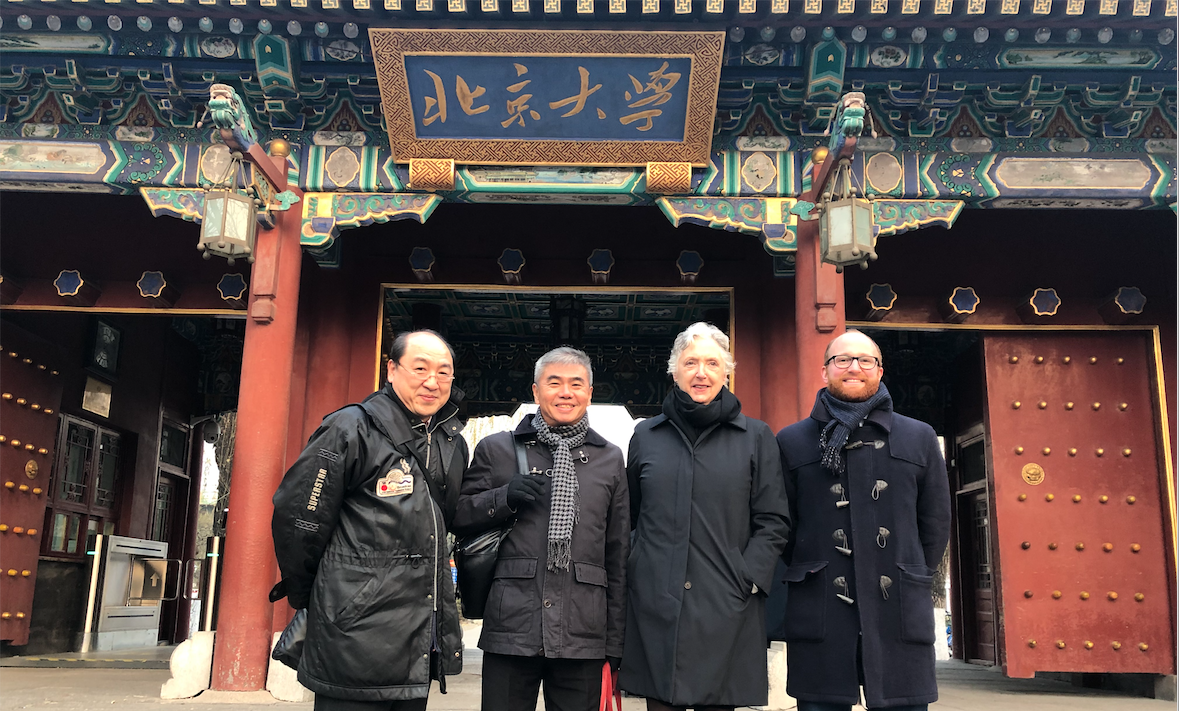
The IARU Alumni Directors met for the 9th time at Peking University on 13-15 December 2018. Learn more about the IARU Alumni Associations Network here.
Author Archives: EL
COP4 Borderlands Field Course Ran Successfully in Summer 2018
The new GT-GSP field course COP4 – Borderland: Critical Approaches to Field Research in the Global South ran successfully from 20 June – 18 July 2018 in Chiang Mai, Thailand. Click below to read about the student perspective.
Two COP4 students wrote a blog on their experiences in the Borderlands course: https://eyeonglobalhealth.com/2018/08/10/borderland-experiences-in-northern-thailand/.
Read the blog post from two ETH Zurich instructors who participated in the course: https://blogs.ethz.ch/ETHambassadors/2018/08/09/board-games-for-borderlands/.
Read more about Borderlands Field Course
2018 ALH and Graduate Student Conference
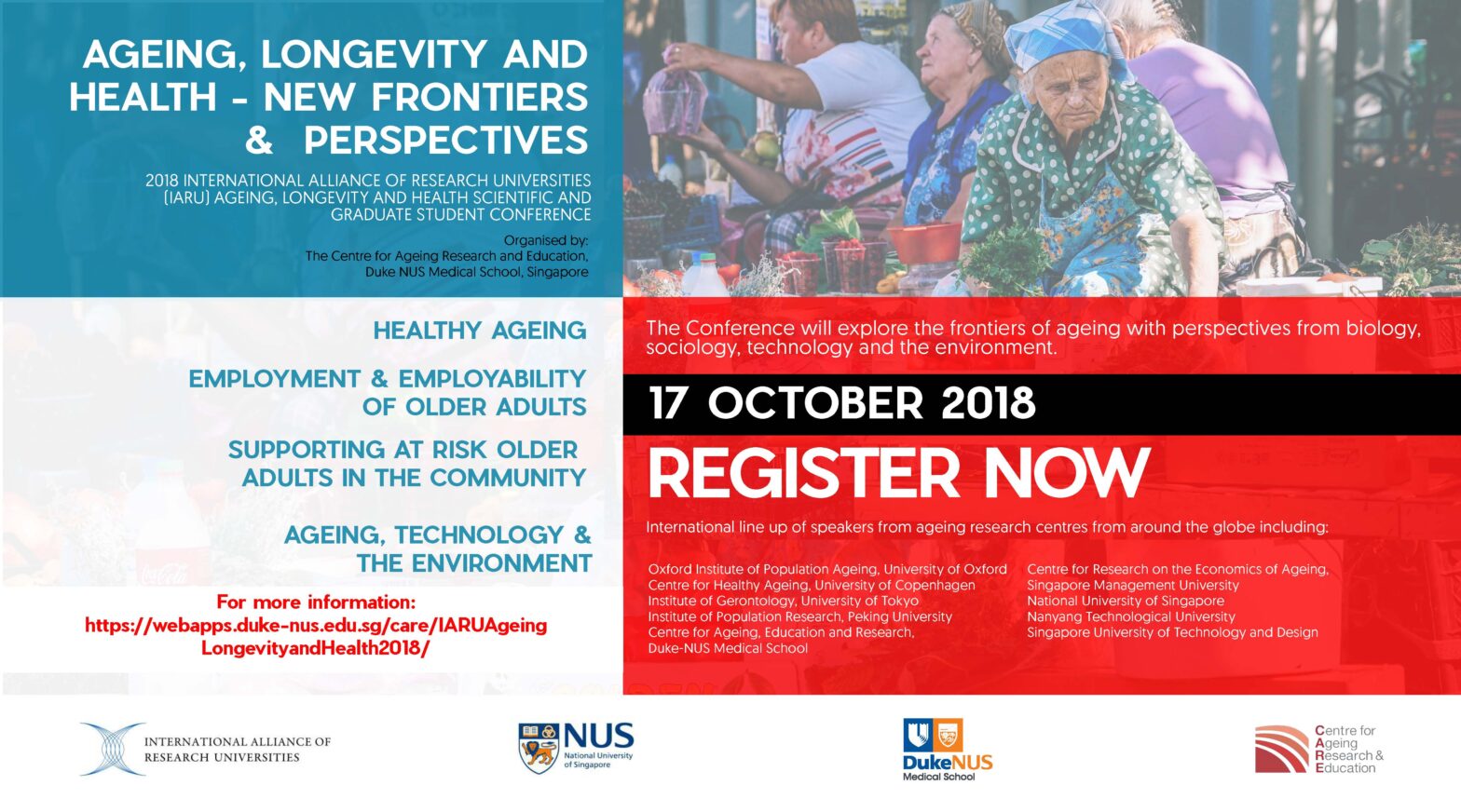
The 2018 IARU Aging, Longevity and Health (ALH) Graduate Student Conference was held on 17 October 2018 at NUS. Graduate students could submit abstracts for presentations until 10 August 2018.
Held in the lion city of Singapore, the conference brought together renown researchers from across the IARU global alliance to feature innovations on:
- Healthy Aging
- Employment and Employability of Older Adults
- Community Support for At Risk Older Adults
- Aging, Technology and the Environment
The IARU Graduate Student Conference was held concurrent with the Scientific Conference to enable graduate students to share their research and explore the possibility of collaborative partnerships within the IARU Network. Partial scholarships of up to Singapore $1000/- were available to graduate students whose abstracts are accepted for presentation. Information on the abstract submission requirements can be found here.
For further inquiries, please contact the conference secretariat at: care@duke-nus.edu.sg.
View the brochure here.
For more information, please visit https://webapps.duke-nus.edu.sg/care/IARUAgeingLongevityandHealth2018/
IARU Launches Cybersecurity Forum in 2018
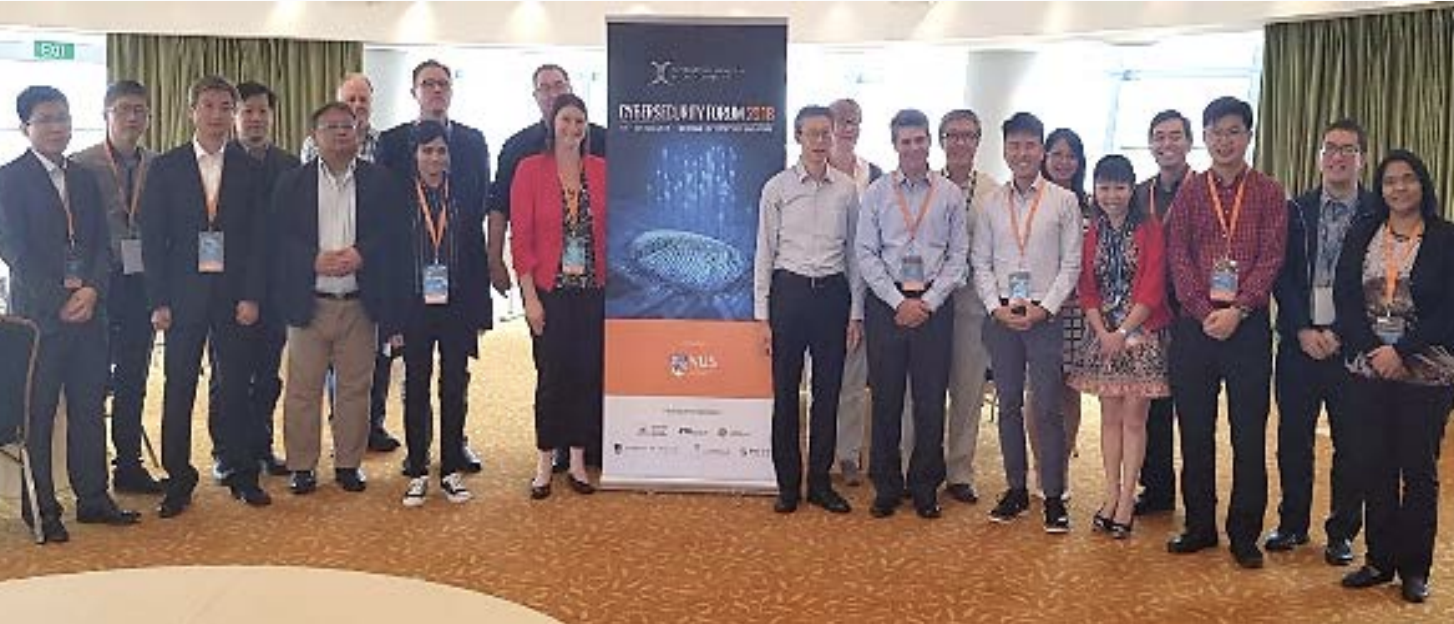
National University of Singapore hosted the 1st IARU Cybersecurity Forum, which took place on 4-5 April 2018.
All representative institutions shared cybersecurity practices in their respective universities’ context and countries. The meeting agreed on follow-up actions in several areas of collaboration, including joint development of KPIs and benchmarks; formation of virtual teams; creation of a shared online platform as well as provision of contact points for specific issues.
Learn more about the IARU Cybersecurity Forum here.
New IARU Sustainability Case Study
This report is designed to provide sustainability practitioners, policymakers and building users with a framework for designing successful initiatives to reduce energy use at universities.
There is no one best way for altering high energy-consuming behaviours, and in order to create enduring, high-impact policies in universities, interventions should aim to change social norms through holistic and multi-pronged approaches. These approaches may involve education, modelling, incentives, environmental restructuring, persuasion, and enabling. Any one-intervention approach is less likely to create success.
Using a literature review and responses from the IARU universities, this report overviews tactics for designing comprehensive and effective interventions. Nine broad intervention options outlined in their model and are linked here to specific interventions with relevance to universities.
Read the Energy Behavior Case Study here.
Learn more about the IARU Sustainability Initiative here.
New Global Transformation-GSP Joint Field Course

The IARU Global Transformation initiative and Global Summer Program have collaborated to launch a joint field course for GSP 2018. Learn more about this course here, titled Borderland: Critical Approaches to Field Research in the Global South.
This course is designed to provide students with an opportunity to think critically about the research process, epistemologies, and ethics in the conduct of research. It combines classroom learning with field engagement and immersion in local environment that include meaningful interactions and placement with local NGOs or ongoing research projects in and around Chiang Mai, in northern Thailand.
Emphasizing the research process rather than the mastery of a specific topic or method, the aim is to provide students with the tools to raise and address critical questions in their own research and a foundation from which they can apply the knowledge and practices from the course to future projects.
We envision that, by the end of the course, each student will have produced a polished draft of a research project proposal (7-10 pages) that could be used for future engagement with the Global South, be it through research, policy, advocacy, or other pursuits. In addition, students are expected to develop and complete a group project and to make meaningful contributions to the organizations or research projects to which they are assigned.
Themes that will be addressed in the course in the context of globalization processes and borderland issues include:
- Borders and boundaries
- Mobilities and immobilities
- Environment and natural resource management
- Human in/security and social justice
Apply for the 2018 Global Summer Program Today

Applications for the 11th IARU GSP cycle are now open! The application period closes on 16 March 2018.
2018 courses include Asia Now! The Archaeology of the Future City, Environmental Leadership Program, Culture, Behavior and Brain, Food of the Future: Environment, Health, and Law, and Afropolitanism, Social Justice and Social Entrepreneurship. Find the entire 2018 course offering here.
IARU-Santander scholarships are available for IARU students. For more information please contact your GSP Coordinator.
Global Internship Program – New 2018 Internship Positions

The IARU GIP is offering multiple internship positions at NUS, UTokyo, UCPH, Yale, and Oxford. Internships are offered for Summer or Fall 2018.
2018 Internships:
The University of Tokyo – Application Deadline 26 January 2018
National University of Singapore – Application Deadline 25 February 2018
University of Copenhagen – Application Deadline 1 March 2018
Yale University – Application Deadline 15 April 2018
Oxford University – Application Deadline TBD
National University of Singapore, International Relations Office – Applications Open all Year
IARU’s New Real Estate Working Group
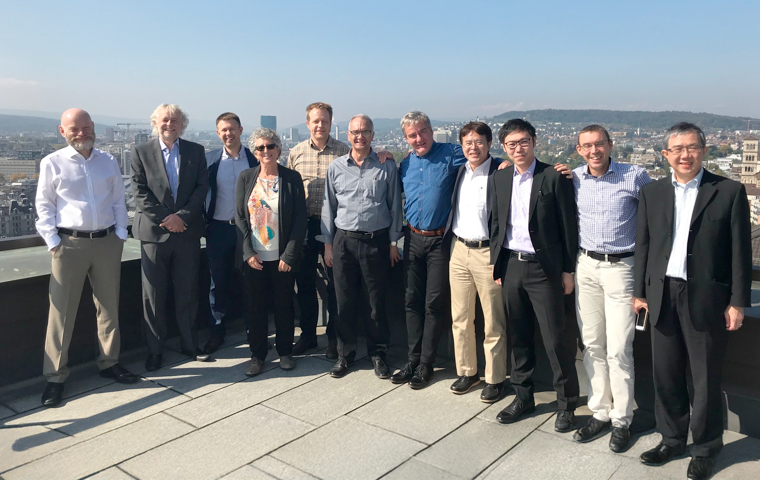
The IARU Real Estate Working Group, launched in 2017, shares knowledge, benchmarks, and conceptual frameworks in the field of real estate development at IARU universities.
The IARU Real Estate Working Group had its first meeting at ETH Zurich on 24-26 September 2017.
Discussions showed high interest in benchmarking, analysis of shared space concepts, and capital investment strategies. ETH Zurich will lead the group, together with Cambridge and NUS (Steering group) at least until the next workshop 2018.
Learn more about the Real Estate Working Group.
Global Internship Program – New position at ETH Zurich

This funded summer internship position is titled “Gender Attainment Gaps in Higher Education.” Application period closes on 15 May 2017.
The intern will work at the office of ETH Equal! to support the process of investigating into causes of gender attainment gaps in higher education, and recommending measures.
The summer internship will take place from June to September 2017 and is remunerated with a stipend of CHF 2,000 per month.
Continue to full job description